Add your promotional text...

Can we Talk?
AI MARKETINGINNOVATIONAI STRATEGYAI ADOPTIONAI ROI
Patrick C. Cox
6/25/20255 min read
There’s no shortage of opinions, hypothesis or hype with regard to the impact artificial intelligence will have on the way we live and work. That’s the reality, industrial revolutions produce step-change productivity improvements, but not without socio-economic displacement and pain in the short-term. During the first revolution, the entire cottage shoe cobbler industry became obsolete. In the third, there were droves of horses that found themselves out-of-work (and stables, etc.) To find work, it was often necessary for those displaced to migrate to cities to find factory work. During this socio-economic re-balancing periods, it was necessary for gov’t., churches and community support groups to provide displaced workers economic support for survival. As we collectively move forward the fourth industrial revolution, very few certainties exist, except for change.
There is a common thread through the previous three industrial revolutions. The objective in each case was to use technology (ex. Steam engine) to multiply human/animal force, power and energy to make tasks easier, faster and cheaper. The fourth event, the advent of AI is quite different in that the force intended to be magnified are human cognitive abilities.
Prior to generative artificial intelligence, the most impactful innovation on society has been the internet. The internet has changed much in our lives - the way that we work, shop, learn, date, manage time, book travel and help us to get where were going. The impact has been significant in both scale and scope and continues to expand. For researchers, the internet has been transformative in both the ease and quality of access of information. In some cases, the internet has democratized access to information and the ability to learn new skills – Could you imagine life without it?
By comparison, the forecasted impact of generative artificial intelligence promises to be greater, by an order of magnitude. Even as Generative AI is still in its infancy, prognosticators forecast massive societal impacts such as the democratization of quality health care, education, transportation (both on Earth and otherwise) and potentially the reduction of green-house gases. In terms of economic impact - Goldman Sachs has predicted the technology will help drive global GDP by 7% while improving productivity by 1.5%. Tech Giants, private equity, venture capital and thousands of start-ups alike are betting their futures on the technology - investing some $225B from 2015-2022.
”Every job will be affected, some jobs will be created, but every job will be affected”
Jensen Huang, CEO Nividea
To-date, the technology is showing tremendous promise.
· Autonomous taxis have moved past the historical adoption hurdle of 5% pointing to mass adoption in San Francisco -and ramping up in Austin.
· AI driven Apps such as Canva, Deep Dream Generator and Runway are democratizing creative development and point to a challenging path forward for many advertising agencies.
· AI now excels at detecting disease, such as cancer from MRIs and x-rays. (Data Science UA; Top AI Achievements 2025)
· Adoption among companies has surged to 72-78% (Vs. 55% YrAgo) globally according to McKinsey’s 2024 Global survey. Chatgpt reached 1MM users in TWO days, achieving adoption velocity not seen previously with ANY innovation.
Let’s dig deeper into the 1.5% expected gain in productivity. While job cuts are not the only contributor to productivity as measured, is the largest, and most significant in terms of potential societal impact. In much of the current AI press, Job eliminations are mentioned as an afterthought. Somewhat similar to the reading of legal disclosures at the end of a pharma advertisement - where the announcer whispers and spits the words so quickly that Eminem would be impressed.
Artificial Intelligence’s cognitive capabilities create productivity by mimicking and amplifying human cognitive abilities. As of the writing of this post, AI is producing parity capability to humans in several measured cognitive areas and improving in most, if not all, rapidly. With theoretically unlimited learning capacity, it is easy to deduce it will not take long for humans to no longer be the smartest in the room.
There’s a second difference between AI and previous technology advancements. Which is the speed and scale of deployment and adoption. Chatgpt had registered it’s 1MM user in just two days! Undoubtedly, this rate of adoption velocity gives credence to the aggressive timing provided in forecasts.
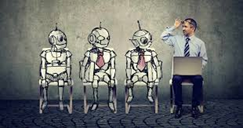
Despite its’ impressive learning capacity, AI can’t do everything by itself. While its capable of delivering answers to complex and challenging questions, it needs someone to ask the right question. AI lacks emotion, making it ill-suited to be effective in a wide variety of professions where human connection is necessary/beneficial.
“AI could wipe out half of all entry-level white-collar jobs — and spike unemployment to 10-20% in the next one to five years”
Dario Amodei, Anthropic CEO
All that being said, here's what industry experts predict –
· 300 million full-time jobs could be replaced globally by generative AI technologies, according to Goldman Sachs. (Financial Times; IMF Warns of Major Disruption to Labor; Darren Dodd, 6/17/2024)
· McKinsey predicts that by 2030, up to 375 million workers globally—about 14% of the workforce—may need to switch occupational categories due to AI-driven automation. (McKinsey 2024 State of AI)
· Up to 73 million U.S. jobs could be at risk of automation by 2030, according to long-term projections.
Status:
AI is already breaking “the bottom rungs of the career ladder”, with junior software developers, paralegals and retail workers at high risk, according to Aneesh Raman, the Chief Economic Opportunity Officer at LinkedIn. (Technology Magazine, 6/9/2025)
· To-date, 1.9 million U.S. jobs have already been affected by AI as of early 2025, with significant impacts in sectors like IT services, finance, and customer support. (https://sqmagazine.co.uk/ai-job-loss-statistics/?utm_source=chatgpt.com)
· Microsoft laid of 6K in May, mainly software engineers as their CEO has noted that AI now writes nearly 30% of their code. (https://opentools.ai/news/2025-sees-massive-layoffs-by-tech-giants-amid-ai-transition)
· Chatbots and generative AI tools have replaced more human roles in two years than robotic process automation did in the past decade.
· AI has reduced entry-level legal assistant jobs by 33% in the US since 2023, mainly through document automation and e-discovery tools.
· In India, AI has displaced over 650,000 IT service jobs, primarily in Tier-1 outsourcing cities like Bengaluru and Hyderabad.
· Klarna has laid off 40% of its workforce and attributed the reduction to AI efficiency. (The Economic Times, 5/18/2025)
· Germany reported a 17% decline in manufacturing jobs attributed to AI adoption in factories between 2023–2024. (The Economic Times, 5/18/2025)
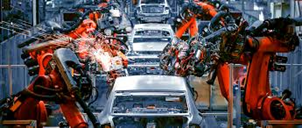
Japan has implemented robotics at a large scale, resulting in the loss of 490,000 warehouse and assembly line jobs by early 2025.
In Canada, AI adoption in insurance and banking led to a 12% reduction in back-office roles in 2024. (https://www.reuters.com/business/finance/canadas-td-bank-profit-falls-hit-higher-bad-loan-provisions-2025-05-22/)
So, what can we do in preparation?
1. Stay close to the front end of AI engagement. The internet created millions of jobs. There was a point in time when nobody knew what a Social network marketing manager did…and then they became indispensable. AI will undoubtedly also spawn new businesses and verticals as it matures. One of the first and obvious new and growing professions will be Prompt Engineering.
2. Invest in developing your soft skills (AI lacks these).
a. Emotional Intelligence
b. Creative problem solving
c. Empathy
d. Negotiation and persuasion
e. Leadership
3. Learn AI – become a part of the evolution
4. Focus on results – AI handles tasks
This is clearly a transition point for our society. We will continue to provide insights and updates. In the meantime, best of luck to each of you on your personal journey.


Accelr8
Management Consulting
Add fuel, reduce drag...Accelr8
Fuel your business. Get our Blog!
© 2025. All rights reserved.
iwanttogofast@accelr8iq.com